
TLDR: This is one of several blogs I sketched during my sabbatical based on a class I took with theologian N. T. Wright. Enjoy.
There are dozens of theological titles we ascribe to Jesus, and all of them have ample biblical foundations within Jewish prophetic writings, and within the first generations of Christianity as the New Testament was being developed. The study of these titles in Christian theology is called Christology: What we can learn and appreciate about Jesus’ identity, mission, and significance for the world and the Church. I love the following quote from the Gospel Coalition:
“Christology ultimately matters to the extent that it is all about the historical Jesus… Christology can anchor our only hope for eternal life or set us adrift in a mental sea of Gnostic gymnastics. Christology can be reduced to just an idea that we argue or an idol we defend, or a seminar we research. But Christology matters because Jesus was real. Christology matters because in Jesus, God took on our flesh through the virgin’s womb; lived in our flesh through his life, baptism, temptation, and sinful community; suffered in our flesh through dying and death; proved the reality of our redemption’s fullness in his resurrection; and recapitulated our humanity in his ascension.” (Reference).
A brief list of the most popular titles for Jesus can be researched in seconds: Christ (Mt 16:16), Son of God (Lk 1:35), Son of Man (Mk 10:45), Lord (Phil 2:11), Bread of Life (Jn 6:35), Light of the World (Jn 8:12), Lamb of God (Jn 1:29), Good Shepherd (Jn 10:11), Alpha and Omega (Rev 22:13), etc. Some of these titles, like Messiah and Son of Man, appear in multiple passages of the Old Testament. Others come as the New Testament reflects on Jesus’ identity and mission.
I have wondered what image from the Old Testament best leads us to Jesus’ identity and mission. Every Lent I use the image of the Suffering Servant of Isaiah 53 to talk about Jesus. I also love how Christian theology has interpreted the Daniel 7 image of the vindicated “Son of Man” and what it says about Jesus’ passion, resurrection, and ascension. Simply stated, Jesus is the Son of Man who dies on the cross to fulfill scripture, has been vindicated through resurrection, has joined God’s glory (elevating our humanity) through ascension, and now sits with the Ancient of Days, as one with dominion and power to judge the heavens and the earth.
This last summer, N.T. Wright introduced me to another image of Christ that clearly shows how Jesus fulfills the expectations and dreams of Jewish Scriptures (Old Testament). Jesus’ mission is not a departure from the old but the point of encounter between the old and the new age of God’s revelation. We get to this title by asking, “Who is Jesus?” and answering, “Jesus is Yahweh who has finally returned to Zion.”
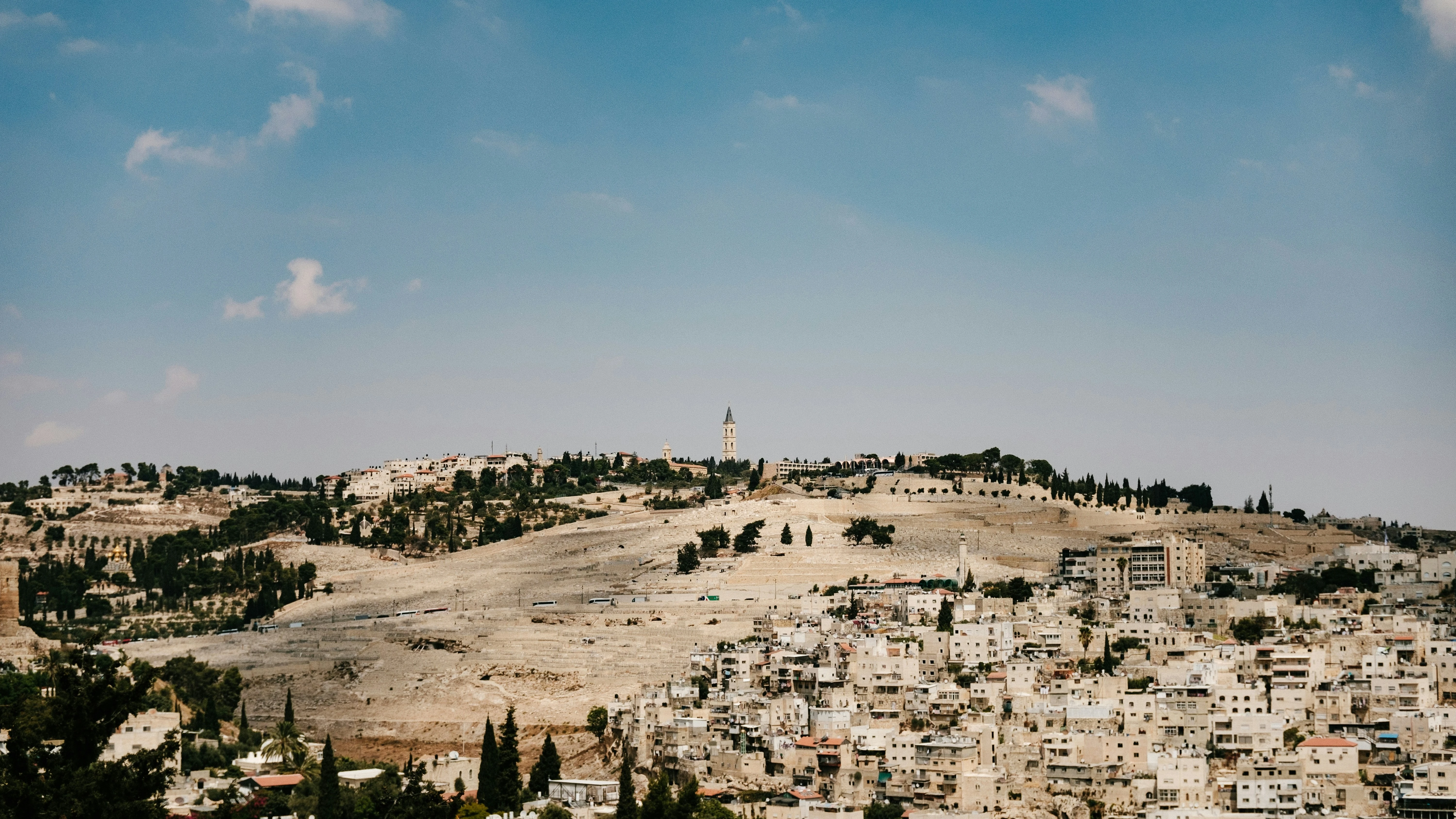
Before we understand this image, let us give a bit of context. The exile to Babylon was one of the most traumatic events in the history of Israel (if not the most traumatic.) As the prophets reflect on this event, they ask the question, “Why did it happen?” In Ezekiel chapters 8-11 an answer is given which is echoed by other prophets: God has abandoned Zion (Jerusalem, Temple, Land) because of their sin. This is the sequence of events of those chapters: (1) God passes judgement against the nation, summarizing their sin as complete and heart-breaking idolatry (Ez 8:1-8). (2) From here, the glory of the presence of the Lord begins to lift above the cherubim in the Holy of Holies, moving to the threshold of the temple. (3) From the temple threshold, God's presence pauses at the doorway, moves over the cherubim, and stops at the east gate of the temple. (4) From here, the divine chariot-throne leaves the temple entirely and rests on the Mount of Olives, east of the city, before leaving the city and its inhabitants forever.
The idea that the exile happened because God’s presence abandoned Zion, brings a tremendous sense of guilt and shame to the people. But the hope of the prophets is that one day Yahweh will return to dwell with Israel. This promise can be seen in some of the greatest passages on which the New Testament relies: (1) Isaiah 40 promises that the glory of the Lord shall be revealed and all flesh shall see it together. (2) Isaiah 52, recapitulating what was said in Is 40, says that the watchmen in Jerusalem will lift up their voices and shout for joy because in plain sight they see Yahweh returning to Zion. (3) Malachi 3 says, “The lord whom you seek will suddenly come to his temple and I will send my messenger before to prepare the way.” So, when you see a messenger and then someone else coming after, this is the Lord Himself, Yahweh Himself. (For a fascinating study of these passages, please see, N. T. Wright’s Jesus and the Victory of God.)
While awaiting the return of Yahweh, Israel has been given tasks to do. It is God’s desire that the people will use the gifts given to them to be the image-bearing stewards of creation and a blessing to the nations. This is important during the second Temple period, when a religious revival saw the birth of conservative movements like Pharisaism, and when the coming of Messiah, and the future return of Yahweh, became widely accepted ideas in people’s minds and hearts. Sadly, no text of the Old Testament, nor any document from the Second Temple years, show Yahweh’s return to Zion. This remained an unfulfilled promise until the coming of Jesus.
The New Testament uses the texts mentioned above (and the end of Ezekiel 43), to tell us that Jesus is Yahweh returning to Zion. “Yahweh has returned in a young Jewish prophet riding into Jerusalem on a donkey in tears, pronouncing judgment over the temple, and going on his way to the upper room, the cross, and to his vindication in the resurrection… The question of who is Jesus, must be answered not so much through a string of titles meaning this or that, but through this great narrative: the people of Judea are waiting for Yahweh to return and in Christ God has finally returned to Zion.” (N.T. Wright, ibid).
According to Wright, the historical understanding of the parable in Luke 19:11-28 misses the point of what Jesus meant, which is exactly to say that Yahweh has returned. The parable tells us of a nobleman who went to a distant region, giving ten of his slaves a pound each to “Do business with these until I come back.” When he returned, he ordered an accounting. The parable narrates the accounting of three of the ten, perhaps because they represent the entire group. The first took his pound and generated ten more pounds. The master says, “Well done, good slave! take charge of ten cities.” The second made five pounds and the Master said, “And you, rule over five cities.” Finally, the third said, “Lord, here is your pound. I was afraid of you; you are a harsh man.” This is met with judgement and condemnation for failing to produce any profit. The Master says, “Take the pound from him and give it to the one who has ten pounds.”
Wright believes that the customary interpretation of this parable is that Jesus will go away and return some day in the “Second Coming” and until then we have work to do for which we will be judged. But in Holy Scripture, “99.9% of the times when a Master goes away and returns to get an accounting, it is always talking about Yahweh returning to Zion.” The point of the Parable is about Yahweh’s return. This is the greatest aspiration for Judeans. It is Yahweh who has given Israel tasks to accomplish until His return, and now that Yahweh has returned in Jesus, it is Jesus who holds the nation under judgement. The idea that this passage is about a future kingdom in the Second Coming is not what the scriptures tell us. The disciples believed the restoration of Israel to be an immediate thing and not something that will happen at some future day. They ask Jesus in Luke, “Is this the time you are going to restore the kingdom to Israel?”
“The answer the history of the Church teaches us has Jesus responding, “No, not yet, but you have a job to do in the meantime.” But in reality, what Jesus answers is, “Yes, the kingdom is being restored even now, here in your presence, but it doesn’t look like you thought it would.” (N. T. Wright, “What I’ve Learned: A Theologian Looks Back” Online class found in Admirato.com).
Yahweh has returned and the kingdom has begun, but that kingdom doesn’t look like political revolution against the Roman empire, “The kingdom looks like a group of believers (the Church) going out in the power of the Holy Spirit to be Christ’s witnesses throughout the ends of the world. This mission will include suffering, martyrdom, and all kinds of difficulties, but it is incredibly important work. The message the Church will preach is that God has returned to dwell with His people.” (Wright, ibid.) The gulf of separation between heaven and earth has been bridged through Christ, because in him YAHWEH has returned to dwell with Zion.
May he continue to bless you, Fr. Roman+