TLDR: Continuing our theological series, this blog on idols builds on last week’s blog and our last Sunday school. If you want the notes of last Sunday class, please contact the office. Enjoy.
Idolatry in a general sense is the worship of anything that is not God. Of the three cardinal sins of Judaism (idolatry, unchastity, and bloodshed,) idolatry was always given the most importance. In short, idolatry was a denial of God’s self-revelation of his Oneness. This denial threatened the very foundations of Judaism’s monotheism and its ethical mandates on the people of God. The single most important prayer in Judaism is an affirmation of this singularity and a statement against idolatry, “Hear, O Israel: the Lord our God, the Lord is One. You shall love the Lord our God with all your heart, soul, and might” (Det. 6:4).
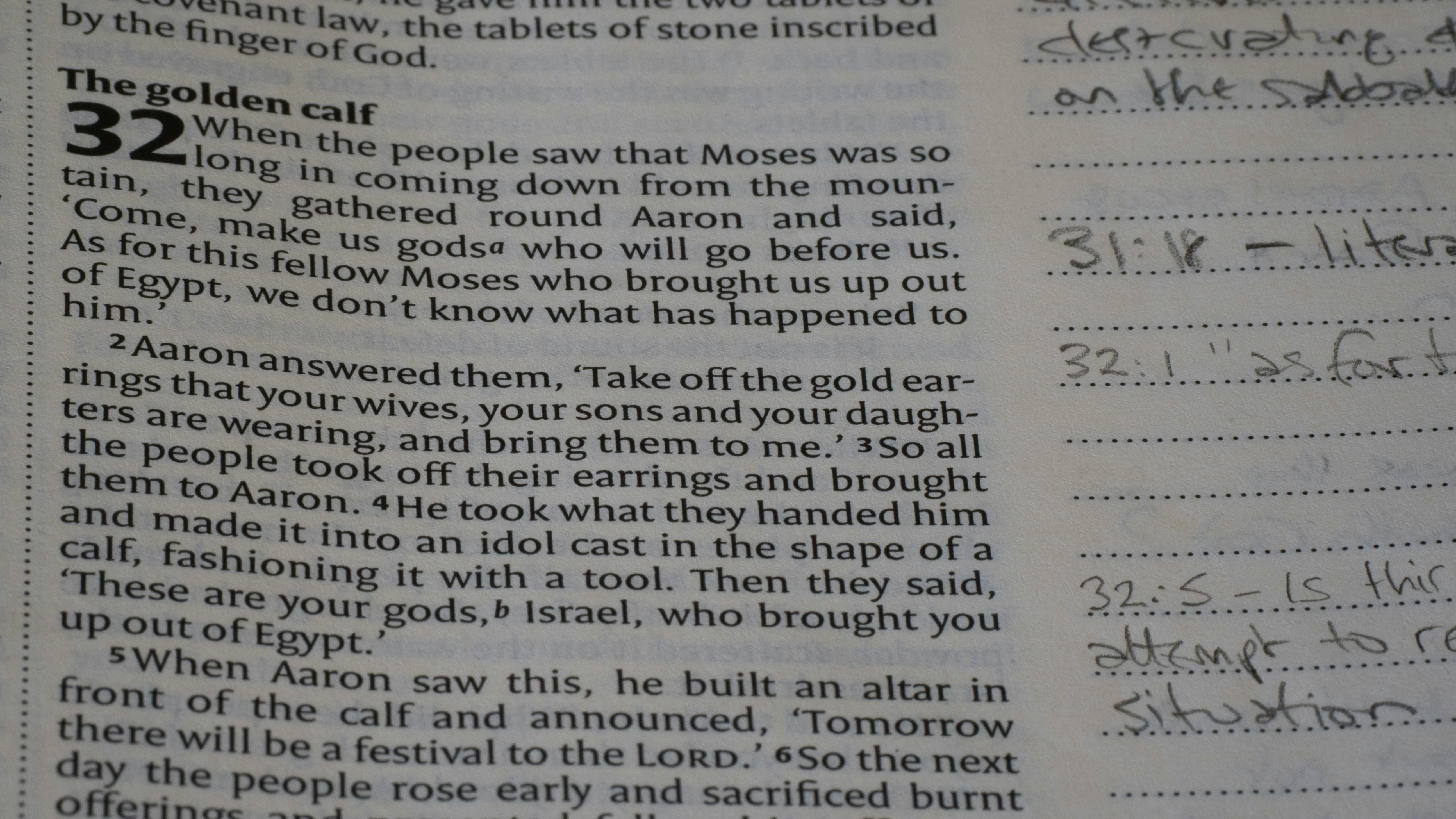
In the Old Testament, the most common form of idolatry was the worshipping of man-made statutes or symbols, but by the time of the New Testament, idolatry was seen as an obsession with anything that took the place of God in a person’s life. The Jewish historian Josephus claims that the entire history of Israel can be seen as a commentary on Deuteronomy 32, the famous episode of the Golden Calf. From the beginning Israel had a fascination with the gods of the nations and worshiped creations rather than the Creator. In a way, this is the issue in the Garden of Eden in Genesis 3 where rather than obedience to God, Adam and Eve chose to listen to the serpent’s invitation to disobey God, with catastrophic consequences. That first act of obedience to an entity other than God, led the first humans to the first exile in the Biblical narrative.
First humans were expelled from paradise and their sin caused a rupture in creation itself. God had created the heavens and the earth to be part of the same united reality, but human sin caused a rupture and separation between the two realities. It is from this very moment on that God designed a plan to reunite what had become separated, returning creation to its original wholeness. This yet-to-come full union of heaven and earth is what the Bible promises for the end of days, a New Creation where God will reign supreme through his Messiah (Revelation 21).
Exile is often the result of a multitude of sins, at the center of which we always find idolatry. In fact, this was part of the warnings of Moses in Deuteronomy 28:58-64 before the people of God entered the Promised Land, “If you do not diligently observe all the words of this law that are written in this book, fearing this glorious and awesome name, … the Lord will scatter you among all peoples, from one end of the earth to the other, and there you shall serve other gods, of wood and stone, which neither you nor your ancestors have known.”
We see a vivid example in Ezekiel 8 of how idolatry (in connection with many other sins) has led to the Babylonian exile. In a vision, the prophet is shown what is happening at the temple in Jerusalem, several years before the mass exile takes place: An image that produces jealousy (idol) has been set in the inner court facing the north side of the temple. A large mural has been erected in the temple proper “where all kinds of creeping things and loathsome animals and all the idols of the house of Israel” are displayed. Before the mural, seventy elders offer incense in worship. Then, there were women weeping for the fertility god, Tammuz, believed to die at the planting of the season and to rise as the harvest was collected. Then twenty-five men are seen giving their back to the temple as they worship the sun. Finally, all those in attendance are “putting a branch to the nose” representing the cinnamon sticks folks use while walking in cities with no sewers, where the sun bakes the garbage all day long producing a foul smell. In other words, they are allowing the pollution of the world to enter into the Temple, the holy meeting place between God and the people.
Years after the remnant returned from Babylon, the prophet Daniel perceived in prayer that although some had been allowed possession of the land, Jeremiah’s promises of restoration after seventy years had not become a reality. “While I was speaking in prayer, the man Gabriel, whom I had seen before in a vision, came to me… “Daniel, I have now come out to give you wisdom and understanding…” The restoration will not take place for seventy times seven weeks (490 years). “This will be a time to finish the transgression, to put an end to sin, and to atone for iniquity, to bring in everlasting righteousness, to seal both vision and prophet, and to anoint a most holy place.” The exile was still unfolding and would not end until almost 500 years later during “the time of an anointed prince” who will come to restore Israel. (Daniel 9:20-27).
Christians believe Jesus of Nazareth is this anointed prince who brings the Babylonian exile to a close through his perfect obedience on the cross. Christ saved humanity from their slavery to idol worship and freed us to worship the true God in freedom and love. The exile was to continue until proper atonement was made to God and the sins of the nations were forgiven. On the cross Jesus makes perfect atonement for the world and forgives the sins of all sinners. Therefore, Jesus marks the true end of the exile. Through his blood the nation is cleansed, so that God may now return to dwell with the people. This is the whole purpose of salvation history. God seeks to dwell among humans and, through the Messiah and his perfect atonement, the terrain is now prepared and the New Creation has begun.
Idol worship is then the ultimate offense to God. Now, to actualize this article to today’s world, we may need to ask several questions: What are the idols of today? How do things like fame, power, disordered sex, money, or our inordinate need for more resemble idols? Have we made other people into idols through a cult of personality? As for the people of Israel in antiquity, idol worship was a real problem for the following reasons: 1. God was revealed to Moses without a physical form. When Israel creates idols, they reduce God’s self-revelation as Creator and lessen God to the status of a creature. 2. Idols can be manipulated and used in a variety of ways to suit their needs, whereas God can never be manipulated or controlled in any way. When they use idols they express a desire for a god that can be controlled and manipulated. 3. Idols are mute and powerless objects made by humans. To give them the honor that should only be given to God is the ultimate sign of disrespect. 4. Idols often help Israel rationalize self-harm and harm to others and these ego-centric behaviors lead to severe social injustice. 5. In Biblical theology humans become like what they worship. Idol worship makes Israel less human and more spiritually bankrupt.
I invite all to assess whether anything or anyone in your life has dethroned God from the place of honor God deserves. And if (or when) you identify these things or people, ask God to help you reorder your life and reassess your priorities. When you love the Lord our God with all your heart, soul, and might you invariably find yourself loving others with more authenticity and humility.
May our Lord continue to bless you,
Fr. Roman+