TLDR: Over the next few weeks I will be sharing some of the highlights of a class I took during my sabbatical. But first, let me tell you how glad I am to be back among you. Thank you for allowing me this time of learning and refreshment.
Professor N. T. Wright, in his study, “What I Have Learned: A Theologian Looks Back” reminded me of a Christian narrative I knew well during most of my life, but which I have questioned over the last two decades. The narrative goes like this: God created a good universe, but humans rebelled and messed things up. God became angry and killed everyone and everything off, starting a new family with 8 people and a boat full of animals. When this did not work, God chose to intervene by giving his people the Law (usually known as the ten commandments) and the prophets. These two gifts were meant to bring the people back to their loving God, but they proved themselves unable to follow the law, and killed many of the prophets of God. Finally, God sent his Son to take on the sins of humanity, dying on a cross so that all of us could go to heaven.
Going to heaven became the mission of many Christians throughout the centuries. Even today much preaching is focused on the idea that there are certain things we need to do to go to heaven, without the necessity of purgatory. And sadly enough, our imagination has had a hard time thinking that our existence in this heaven will be both a physical and spiritual reality. So, the message has become, “you need to behave so your soul may go to heaven.” But Wright believes this is not what the Holy Scriptures are all about. The Bible is not a recipe book that teaches us how to get to heaven, leaving behind this corrupt and dirty world and our matter-decaying bodies. Rather, the story of the Bible is about God’s love for his creation, a love that can be seen in the big ark of salvation history from the first creation to the new creation that awaits the end of days and the reign of Messiah.
Wright presents us a new biblical narrative that goes like this: God’s creation was always meant to be a united reality that included heaven and earth. They were created on the same day and both were declared “good” after the 7-day cycle of creation was done. Humanity is the centerpiece of creation and the only part called “very good.” Humans share in the likeness of God and are given authority over the rest of creation. “God always wanted his creation to be wisely ordered under the stewardship of image-bearing humans.” (Wright). Humanity’s disobedience, however, brought disorder into the world. They failed in their vocation to be wise stewards of creation and proper image bearers of God’s likeness. “When you listen to, worship, and serve that which is not God, then your humanness begins to deconstruct.” (Wright). Human pride led us to disobedience, chaos, arrogance, violence, and disorder. These behaviors have led us to a series of exiles: from Paradise, from the promised land, from the Temple, etc.
When the whole human race went wrong, God chose Abraham to seed a nation through which God could right all the wrongs of the world. When that nation failed in their ultimate vocation to be a blessing to the world, God sent the Messiah to be the perfect human, the only person able to fully reflect the image of God to the world. Through Messiah, God begins the process of righting all the wrongs of the world. This process, which has already begun, will continue until one day a new creation of heaven + earth will become a reality. In this new creation God’s glory will fill the entire universe and the will of the Almighty will be done on earth as it is in heaven.
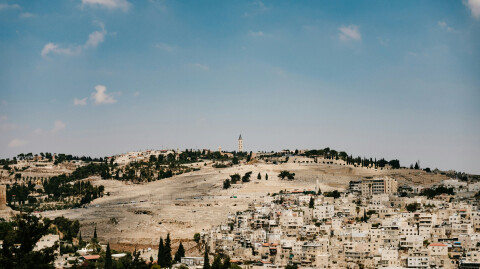
When we die we don’t abandon earth to be lifted to a far away heaven. Rather, heaven comes to us. There will be once again a perfect unity of heaven and earth in a new creation, as it was meant to be from the beginning, and we will be given a new life in this new creation. This is the biblical claim, and we see it very clearly in Revelation 21:1-2. That crucial passage to understand this promised new creation goes like this:
“Then I saw a new heaven and a new earth, for the first heaven and the first earth had passed away, and the sea was no more. And I saw the holy city, the new Jerusalem, coming down out of heaven from God, prepared as a bride adorned for her husband.”
A united new creation will become the home where God will choose to dwell. “See, the home of God is among mortals. He will dwell with them; they will be his peoples, and God himself will be with them and be their God; he will wipe every tear from their eyes. Death will be no more; mourning and crying and pain will be no more, for the first things have passed away.” The full radiance of God’s glory will be experienced by the entire creation.
But there is a danger in pushing this promised new creation to sometime in the distant future. Remember that Jesus made the outrageous and life-shattering claim that the kingdom was already among us. The reign of Messiah, his kingdom, has already started. When Jesus preached about this kingdom, he compared it to a treasure of incalculable value. But he also used images like a mustard seed that grows into a large bush providing shelter for all sorts of birds. Like leaven or yeast, where a tiny portion works quietly through a batch of dough. Like a hidden treasure or a pearl of great value that requires that we sell everything to possess it. All of these images are a call to action to us. Rather than waiting to be beamed out of earth to go to heaven, we are to germinate the entire world with love and mercy. We are to reflect God’s image to the world, especially in the quiet and ordinary moments of our life. We are to have an unwavering commitment to be God’s image bearers in the world, choosing God’s kingdom above all things. Ultimately, it means to love others as God in the Messiah has loved us.
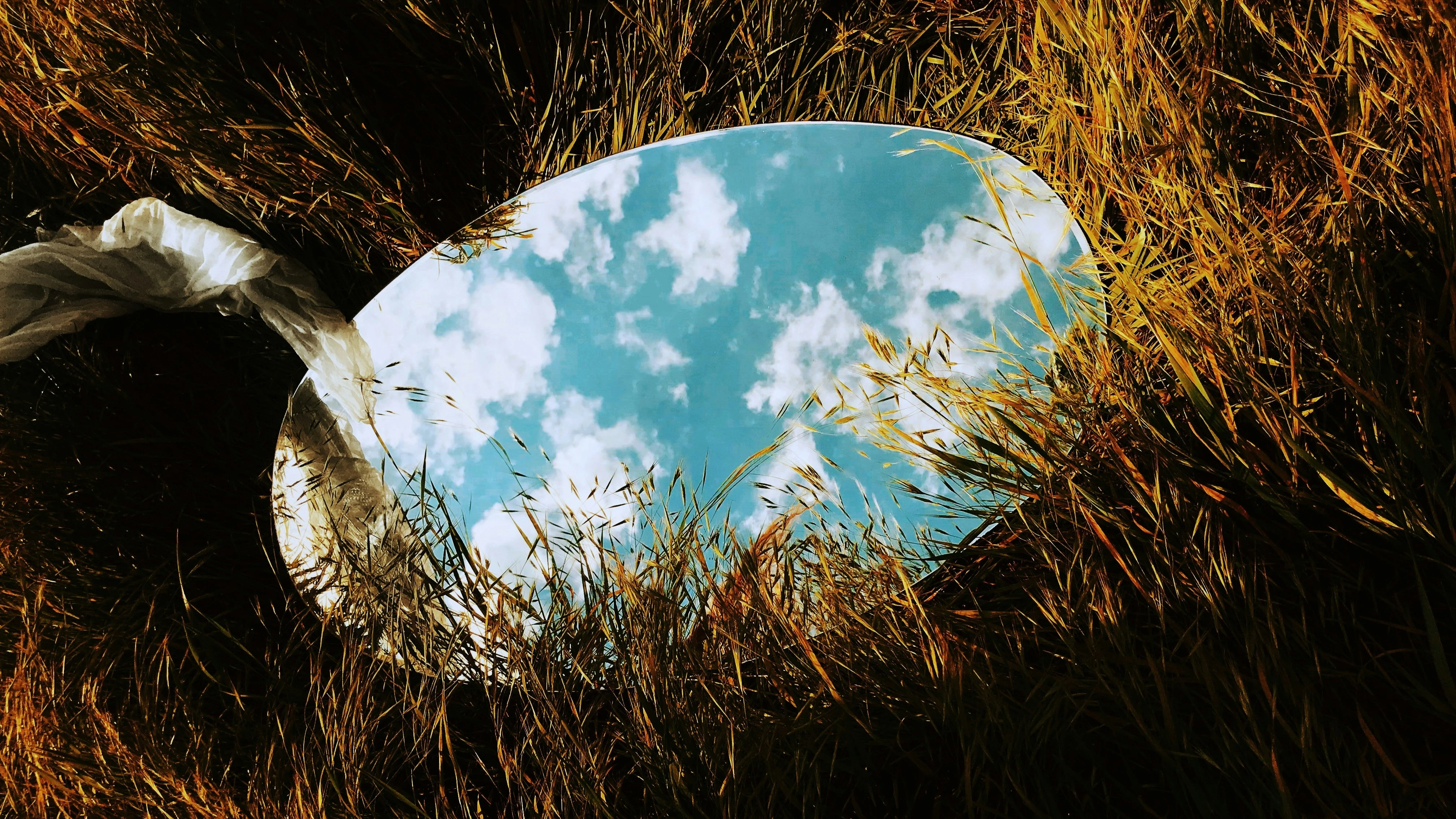
Rather than choosing a quiet corner in our comfortable lives to wait for the day when we leave earth to go to heaven, the kingdom requires us to be fully engaged in life. It demands that we become a mirror in which others can see God’s own image, until such a time when the heavens and the earth become united forever in a new creation in which God’s glory will shine for eternity, and we will be able to see each other face to face without shame or fear.
Please join me for Sunday School this coming Sunday at 10:10 for a more in-depth discussion on this topic.
Blessings to all, Fr. Roman+