I will give in my house and within my walls a monument and a name better than sons and daughters; I will give them an everlasting name that shall not be cut off. Isaiah 56:5, ESV
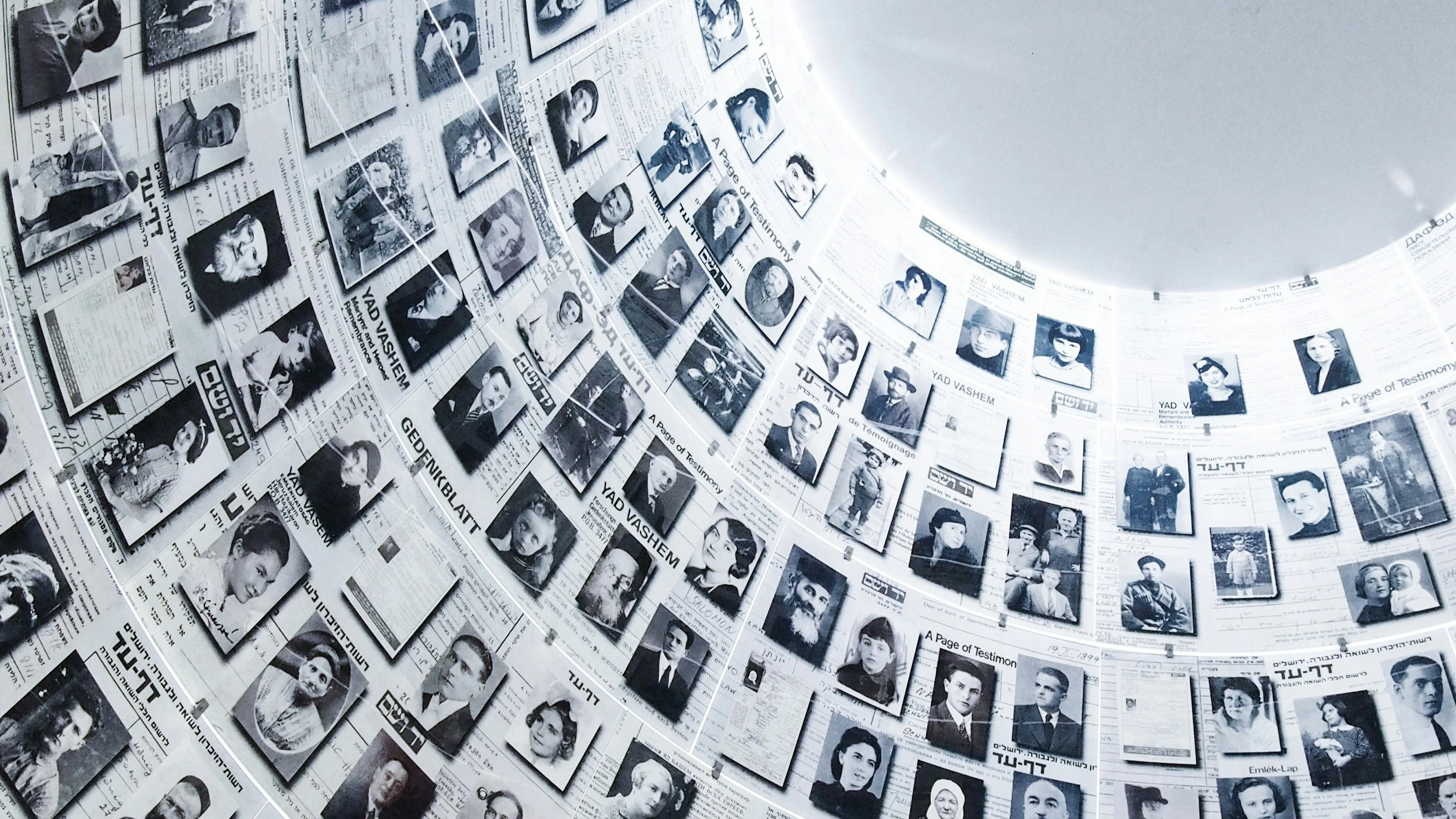
On the western slope of Mount Herzl, named for Theodor Herzl, the father of modern political Zionism, and adjacent to the Jerusalem Forest, stands a forty-five-acre complex known as Yad Vashem. The Hebrew words yad vashem mean “a memorial and a name.” Conceived during World War II in response to reports of the mass murder of Jews in Nazi-occupied Europe, Yad Vashem was established by the State of Israel in 1953.Its purpose is to remember. It preserves the names, stories, photographs, possessions, and memories of those who were murdered during the Holocaust. It also tells the story of those who, at great personal risk, chose to save Jews from certain death.
One of the most moving places at Yad Vashem is the Garden of the Righteous Among the Nations. There, non-Jews who risked their lives to rescue Jews during the Holocaust are honored. Among the recognizable names are Oskar Schindler, Raoul Wallenberg, and Corrie ten Boom. But there are thousands of others whose names might otherwise have been forgotten—ordinary people who performed extraordinary acts of courage and compassion. Many are remembered by trees—thousands of trees--planted along the Way of the Righteous.
During my first visit to Yad Vashem in 1996, I walked along that path of beautiful, mature trees. Then I noticed one very small tree. Its plaque read, “Corrie Ten Boom.” I wondered why her tree was smaller than the others. Our guide, Reuven, explained that when Corrie ten Boom died in 1983, her tree had inexplicably died as well and had to be replanted. I have never forgotten that little tree.
The Holocaust was one of the great human tragedies of history, and Yad Vashem exists so that its victims will not be forgotten. Its very name reminds us that every life has a name and that every name represents a person—a mother, father, son, daughter, brother, sister, friend.
Yad Vashem is also a place of instruction. It does not merely ask its visitors to remember what happened. It asks them to understand how it happened and to consider what must be done to prevent such a catastrophe from happening again. That is particularly important to the people of Israel. Generations of Israeli students visit Yad Vashem as part of their education. Members of the Israel Defense Forces visit as well, confronted with the terrible history of what happened to their people and with the responsibility that comes with defending the nation of Israel. More than a million people visit Yad Vashem each year.
This week, we remember another catastrophe—one that most Americans once believed could never take place within our own borders. On September 11, 2001, nineteen terrorists carried out a coordinated attack against the United States. The attacks resulted in the deaths of 2,977 people, excluding the nineteen hijackers. Nearly 3,000 innocent men, women, and children were suddenly and violently taken from their families and friends. It was the deadliest terrorist attack in American history and one of the most consequential attacks ever carried out against the United States.
Today, we have our own yad vashem—a place and a name.
At the site once known as Ground Zero in New York City stands the National September 11 Memorial. Two enormous reflecting pools occupy the footprints of the Twin Towers. Around them are inscribed the names of those who died.
Their names.
Just as at Yad Vashem, we remember not merely a number but individual human beings. And just as Yad Vashem remembers those who risked everything to save others, the 9/11 Memorial remembers the firefighters, police officers, emergency workers, passengers, and ordinary citizens who gave their lives trying to save their fellow human beings. Not unlike Yad Vashem, the 9/11 Memorial also speaks of life after destruction—of rebuilding, renewal, and hope.
I shall never forget the depth of emotion I felt when I visited the memorial in 2018. As I stood beside those enormous pools and looked at the names surrounding me, one thought kept returning to my mind.
Never again.
I imagine that many who visit Yad Vashem have felt something similar. Never again.
But there is an important distinction between remembering and learning. George Santayana wrote in The Life of Reason, “Those who cannot remember the past are condemned to repeat it.” Winston Churchill later expressed a similar thought when he said that those who fail to learn from history are doomed to repeat it. The difference is subtle, but important.
Remembering is not the same as learning from what we remember.
We can build memorials. We can inscribe names in stone. We can tell our children what happened. We can observe anniversaries and say, “Never again.” But if our remembrance does not change us, then we have remembered without learning.
The Apostle Paul reminds us that the things written in Scripture were given to us as examples and warnings. We are not merely to know what happened; we are to learn from it.And God has not left us without instruction.
He tells us:
“If my people, who are called by my name, will humble themselves and pray and seek my face and turn from their wicked ways, then I will hear from heaven, and I will forgive their sin and will heal their land” (2 Chronicles 7:14, NIV).
Those words begin not with political power, military strength, or national pride. They begin with humility. They call us to pray. They call us to seek God. And they call us to turn from our wicked ways.
As we remember September 11, we should certainly remember those who died. We should remember those who sacrificed themselves trying to save others. We should remember the families who were left behind. We should remember the courage of those who ran toward danger while others were running away.
But let us do more than remember. Let us learn. Let us learn that hatred can have terrible consequences. Let us learn that human beings are capable of extraordinary courage, but also of extraordinary evil. Let us learn that freedom is precious and never to be taken for granted. And above all, let us remember that the security and healing of a nation ultimately depend upon something deeper than human strength.
As we come to this day of remembrance, may we as individuals—and as a nation—humble ourselves before God, seek His face, turn from our wicked ways, and place our trust in the One who alone can save and heal us.
Never again. But not merely because we remember.
Never again because we have learned.
Prayer
Almighty God, who hast given us this good land for our heritage: We humbly beseech thee that we may always prove ourselves a people mindful of thy favor and glad to do thy will. Bless our land with honorable industry, sound learning, and pure manners. Save us from violence, discord, and confusion; from pride and arrogance, and from every evil way. Defend our liberties, and fashion into one united people the multitudes brought hither from many kindreds and tongues. Endue with the spirit of wisdom those to whom in thy Name we entrust the authority of government, that there may be justice and peace at home, and that, through obedience to thy law, we may show forth thy praise among the nations of the earth. In the time of prosperity, fill our hearts with thankfulness, and in the day of trouble, suffer not our trust in thee to fail; all which we ask through Jesus Christ our Lord. Amen. —Book of Common Prayer, p. 820
Blessings,
Steve+