
“There is nothing concealed that will not be disclosed, or hidden that will not be made known.” Luke 12:2
The Duke of Wellington is best remembered as the British general who defeated Napoleon at Waterloo in 1815. But years earlier, during his military service in India, Wellington was involved in negotiations following the Battle of Assaye.
The emissary of an Indian ruler was anxious to find out what territories would be ceded to his master. He tried various ways to get the information from Wellington, but nothing worked. Finally, he offered Wellington a large sum of money. Wellington looked at him and asked, “Can you keep a secret?”
“Yes, indeed,” the man replied eagerly.
“So can I,” Wellington answered.
Some things are easier to keep secret than others. We live in a world in which we are constantly reminded that our information is valuable. We have passwords, privacy settings, security questions, encrypted accounts, and two-factor authentication. We are told to be careful about what we put online because once something is out there, it may never completely disappear.
We have another kind of privacy as well. There is the person we present to the world, and then there is the person we know ourselves to be. There are things about us that we are perfectly happy for other people to know. And then there are things we would just as soon keep to ourselves. Some of those things may be embarrassing. Some may be things we regret. Some may be wounds we have never talked about. Some may be failures. Some may simply be parts of ourselves that we would rather keep private. We all have a private side.
The problem is that there is One from whom nothing is hidden. God already knows. God sees the things we show to others, but God also sees the things we hide. God knows not only what we do, but why we do it. God knows our words and our thoughts, our actions and our intentions.
And that is what Jesus is talking about in the scripture from Luke’s Gospel. “There is nothing concealed that will not be disclosed, or hidden that will not be made known.”
At first, that sounds like a frightening thing to hear. And, frankly, it can be. Most of us would probably prefer that some things remain undisclosed. But Jesus is speaking these words in the context of hypocrisy. He is warning his disciples—and us--not to become so concerned with appearances that they forget about the truth of who they are before God.
The word “hypocrisy” originally referred to an actor wearing a mask. And that is a pretty good picture of what hypocrisy can become. We put on a face for the world. We want people to think that we are more patient than we really are. More generous than we really are. More faithful than we really are. More put together than we really are. And sometimes we even do that with God. We can spend a great deal of energy trying to look like the person we think God wants us to be. But the wonderful thing is this: God already knows who we are. And God loves us anyway.
That is an important part of this passage that we can easily miss. Jesus is not saying, “Be terrified because God knows all your secrets.” He is saying, in effect, “You don't have to live behind a mask.” God already knows. And because God already knows, we can finally be honest.
The Christian life is not about convincing God that we are better than we really are. It is about allowing God to transform the people we really are. That is why confession is such an important part of our faith. When we confess our sins, we are not giving God information God didn't already have. We are simply telling the truth. And there is tremendous freedom in telling the truth.
In 1 John, we are reminded, “If we confess our sins, God, who is faithful and just, will forgive us our sins and cleanse us from all unrighteousness” [1John 1:9]. And the Psalmist says that God doesn’t just forgive our sins, rather: “As far as the east is from the west, so far has he removed our transgressions from us.” That is the good news of the Gospel. God knows everything about us, including the worst things about us, and yet God does not turn away from us or abandon us.
God's knowledge of us is not merely a knowledge of our failures. God also knows our hopes, our fears, our disappointments, our wounds, our good intentions, and the things we have done that no one else ever noticed. God sees the whole person. And that means that God's judgment is not like human judgment. We tend to judge one another by what we can see. God sees the heart.
There is another important point in what Jesus says. Our private actions are rarely as private as we imagine. What we do affects other people. A harsh word can stay with someone for years. A dishonest decision can hurt an entire family. Sin has a way of spreading. We sometimes tell ourselves, “It's my business. It only affects me.” But very few sins stay contained. Anger spills over. Resentment spills over. Dishonesty spills over. Addiction spills over. Selfishness spills over. What happens inside us eventually finds its way into our relationships.
And the opposite is true as well. Grace spreads. Forgiveness spreads. Kindness spreads. Generosity spreads. Faithfulness spreads. An act of kindness can change someone's day—or even someone's life.
The things we do in secret are not always as private as we imagine. So perhaps Jesus is inviting us to ask a simple question:
How honestly am I living?
Not, “How good do I look to other people?”
Not, “What do people think of me?”
But, “Who am I when I stand honestly before God?”
Am I the same person in private that I try to be in public?
Where am I wearing a mask?
What am I afraid to acknowledge?
What do I need to confess?
And perhaps most importantly:
What do I need to place in God's hands?
Jesus isn't telling us that we have no right to privacy. Privacy is not hypocrisy. We don't have to tell everybody everything about ourselves. But we do need to be honest with God—and increasingly honest with ourselves.
The good news is that we do not have to wait until the end of our lives for everything to be revealed. We can begin revealing it now. We can tell the truth. We can confess. We can ask forgiveness. We can make amends. We can stop pretending. And we can discover that when we finally take off the mask, we are not standing before an angry God waiting to condemn us. We are standing before the God who has known us all along. The God who knows us better than we know ourselves. The God who sees everything—and loves us anyway.
We sometimes think Christianity means performing holiness—saying the right prayers, coming to church, looking respectable, knowing when to stand and sit, and generally appearing as though we've got our spiritual lives together.
But the point of worship isn't to convince God that we're holy.
Worship is where we come to God because we know we aren't.
Perhaps the goal of the Christian life then is not to become someone who has nothing to hide. Perhaps it is to become someone who no longer needs to hide. Because one day everything will be brought into the light. And the Gospel tells us that the light of Christ is not merely the light that exposes. It is the light that heals.
And that is why we don't have to be afraid of the light. We can step into it. We can bring our whole selves into it. And discover that the God who sees everything...
…is also the God who loves us completely.
Blessings,
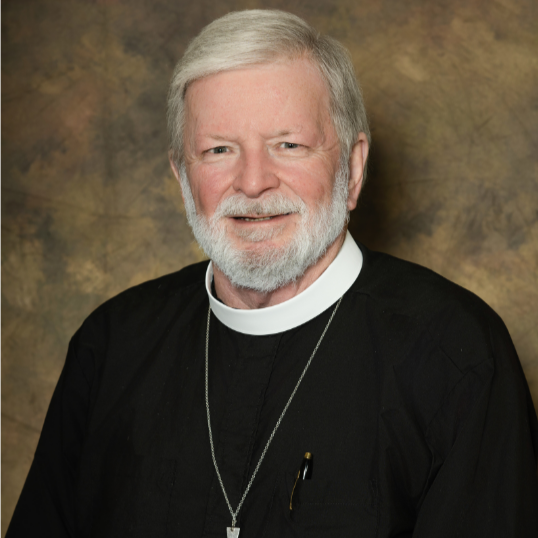
Fr. Steve