TL;DR: I preached on 1 Thessalonians 1:1-10 this last Sunday. Below are a few comments on the Gospel reading from Matthew 22:15-22. Enjoy!
The Gospel readings for 10-18-26, and the one for next Sunday, bring several opponents who want to catch Jesus saying something they can use to arrest and kill him. In the passage for this last Sunday, there are two historical enemies who join forces against Jesus. The disciples of the Pharisees and the Herodians ask a question about taxes. Next, in Matthew 22: 23-33, (a passage jumped by the Lectionary this year) the Sadducees ask about the resurrection. Then, on 10-25-26, a Pharisee lawyer will ask, “Teacher, which commandment in the law is the greatest?” (Matthew 22:34-46). The opposition is doing everything they can to get rid of Jesus after realizing that his recent parables were preached against those in authority. In his teachings, they see themselves unmasked: they are the disobedient sons who refuse to step into the vineyard, the wicked tenants who refuse to share the harvest and killed the landowner’s son, and the evil guests who refuse the king's wedding invitation or presume they have no need for a wedding robe.
The two groups for this Sunday make strange bedfellows. The deep historical, political, and economic differences separating them should keep them apart. That they choose to unite to entrap Jesus reveals just how dangerous they believe he has become. They approach him with a trap designed for a conviction of insurrection and treason, asking whether it is appropriate for Jews to pay taxes to Caesar. A negative response allows the Roman-allied Herodians to accuse him of sedition against the Emperor. An affirmative response risks upsetting the crowds and the Pharisees, who deeply resent the occupying, pagan Roman Empire and the very instrument used to pay the tax. How Jesus answers will determine what happens next in his life.
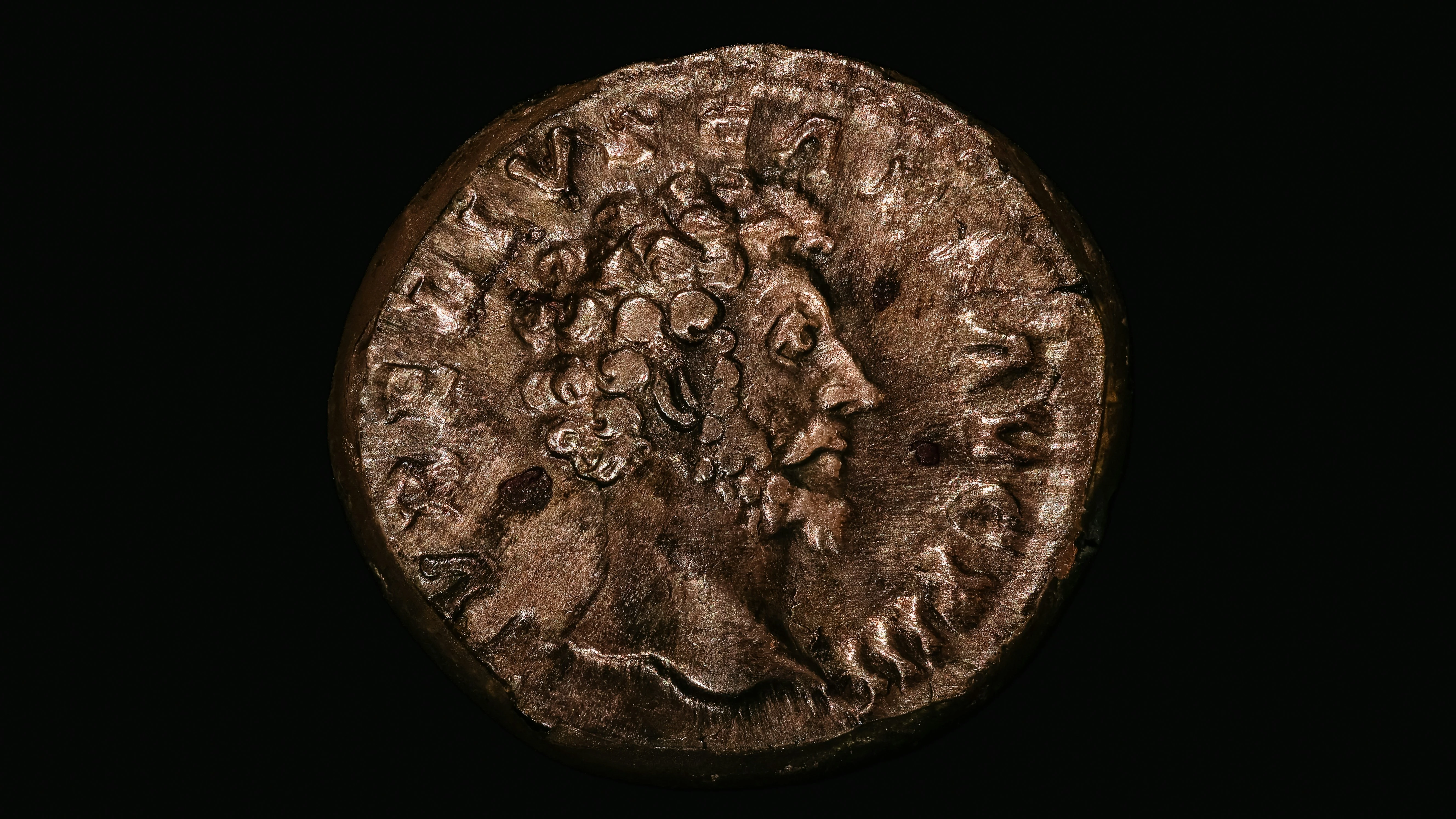
The problem centers on the Roman coin itself. Taxes need to be paid in Roman coins and these bear images and titles that ascribe god-like status to the emperor or his sons. Carrying these coins made righteous Jews unclean by violating the strong Torah mandates against creating carved idols or physical representations of anything in heaven, earth, or under the earth (Exodus 20:4.) Most Pharisees purchase these tax coins at the time of payment.
Jesus is not carrying such a coin. He asks for one to be produced, then looks at it and asks whose image and title it bears. When they answer, he responds with profound logic: give to the emperor the things that are the emperor’s, and to God the things that are God’s.
This is creation theology at its fullest. The key word is image, or eikon in the Greek. The contrast lies between the image stamped on the coin versus the image stamped on the coin's holder. Human beings are the Imago Dei. According to Genesis, God created humankind in his own image and likeness, male and female. Therefore, while Caesar deserves to be given back what belongs to him, his tax money, respect, and obedience, God deserves what belongs to Him, which is our total selves in every single sphere of life.
As image bearers, we belong to God completely. Every cell in our body, every penny in our accounts, and every molecule of everything we own belongs to God. We cannot escape this reality, yet human beings frequently attempt a high level of compartmentalization. It is an inconvenient reality that wherever we go, there we are. We are God’s image whatever we are. We cannot claim our Christian values have nothing to do with how we vote or how we manage people. We cannot live as if a certain part of us is left unbaptized so we can hold our axes and clubs to beat others at will Monday through Saturday, while pretending to be good humans on Sunday. There is no clean separation between the people we are during the week and the people we are on Sundays. We are always the only creation that bears God’s own image.
We are individually and collectively God’s image in the world. At our molecular level, there is no separation between our political and moral duties. We are always Christians, whether we are at the courthouse or in the church house. When we participate in the political process and give to Caesar what belongs to Caesar, we must do it as Christians. Our duty is whole, bound by two equal Old Testament principles, which Jesus will unite beautifully next week. The Jewish Shema (Deuteronomy 6:5) mandates that we love God with all our heart, soul, and strength. The command to love from Leviticus 19:17 mandates that we love our neighbor as ourselves.
Jesus shows us that being a Christian requires engaging responsibly in society, paying taxes, voting, and working together for a just world. Voting is a religious duty as important as worship. But whereas our duties to government are strictly limited, our duties to God are all-encompassing. When our allegiance to God lands in the crosshairs of governmental power, Scripture expects us to stand as image-bearers of a different ethic than political expedience or economic advantage. We must look closely at our lives and wonder: are we truly giving God everything that belongs to Him, or are we just giving God the leftovers?
May our Lord continue to bless you.
Fr. Roman+