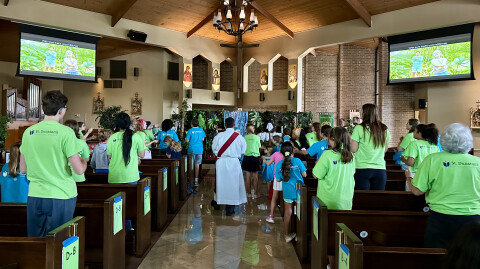
Holy Week is one of the busiest times of the year, especially for clergy and those unsung heroes, the Altar Guild. When Fr. Roman on Sunday thanked the Altar Guild for their dedication and hard work of preparing for ten services in four days, I suddenly became very tired, not just physically, but emotionally and spiritually, as well. After all, we had all been on a journey that began in triumph on Palm Sunday, quickly descended into betrayal, suffering, and silence, and climaxed with the glorious celebration of Our Lord’s Resurrection. I have to say that we do worship well here at St. Dunstan’s. Our Easter Services were filled with joy and elation, from the Great Vigil and its welcoming the newly baptized into the Body of Christ, to the meditative and reflective Early Service, to the exuberance and excitement of the Contemporary Service, to the majesty and magnificence of the Traditional Mass, complete with choir and horns (Including our own David Horn. I’m sorry; I just couldn’t pass that one up).
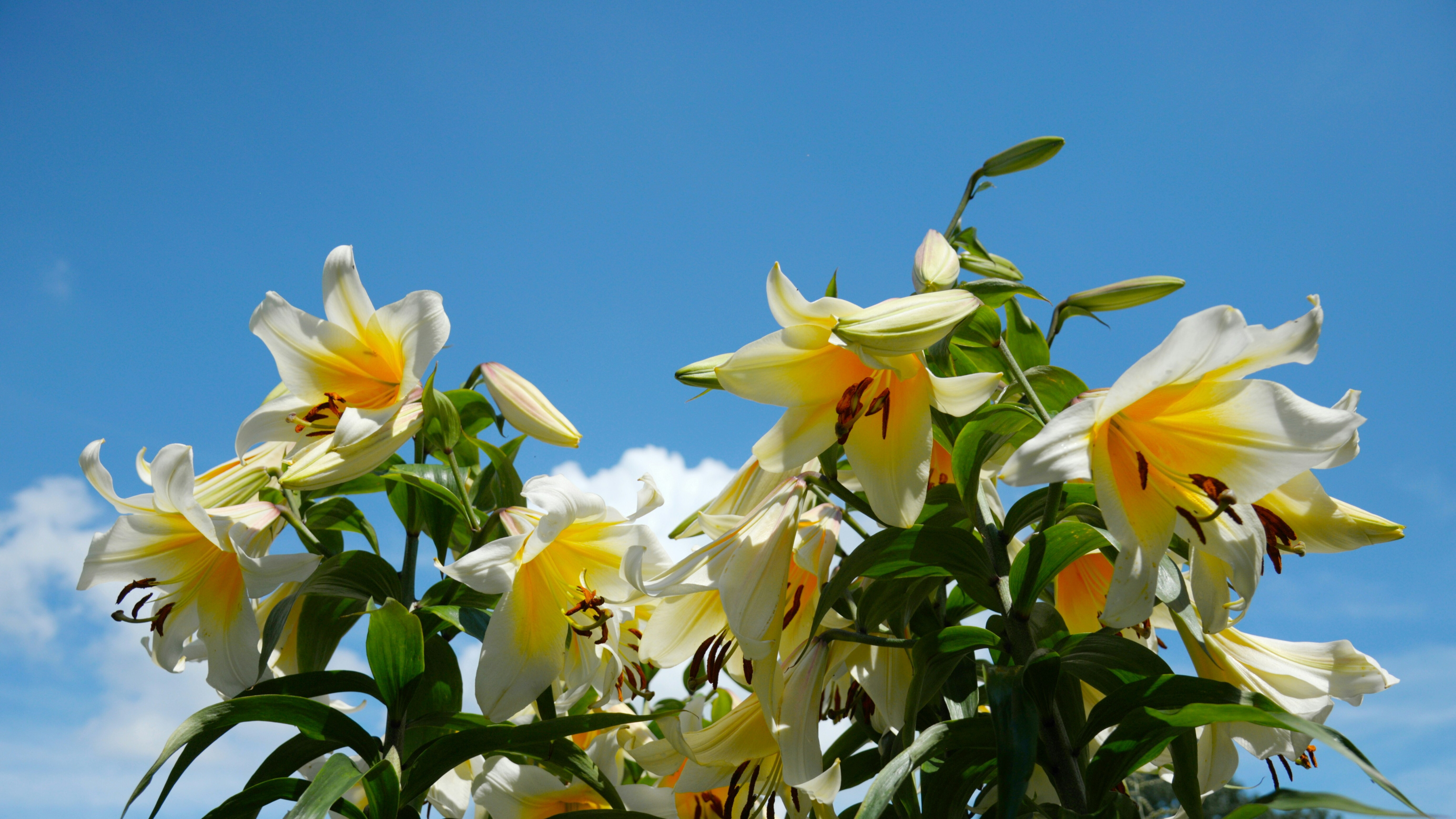
The week after Easter, however, is a quiet, often overlooked stretch of sacred time. The lilies are still fresh, the alleluias still echo, but something shifts. The crowds thin. The celebration softens. And we are left not with the spectacle of resurrection—but with its meaning. Easter Sunday is a moment. The week after Easter is a journey, just as conversion is a moment in time, but sanctification is a lifelong endeavor.
In the Gospel accounts, the resurrection does not instantly resolve everything. The disciples are not suddenly fearless or clear-eyed. Instead, they are uncertain, even afraid. They lock doors. They question what they’ve seen. Thomas doubts. Peter returns to fishing. The risen Christ does not rebuke them for this—He meets them in it. That is the spiritual invitation of the week after Easter: to discover that resurrection is not just an event to celebrate, but a reality to grow into.
You see, for most of us, Resurrection unfolds slowly.
It appears in locked rooms, where fear still lingers.
It walks alongside us on ordinary roads, as it did for the disciples on the way to Emmaus.
It meets us in familiar routines—like breakfast on a shoreline—and transforms them quietly.
One of holiest moments in my life and one of my great joys as a priest was to be able to celebrate the Holy Eucharist on the Mensa Christi (the “Table of Christ”), the limestone block believed to be the one on which Jesus and the Disciples ate breakfast beside the Sea of Galilee following the Resurrection, located in the Church of the Primacy of St. Peter. But even those holiest of moments, those mountaintop experiences, eventually fade into memories.
So it is with our Easter faith. We want it to feel triumphant and certain and to last. But the truth is, as the celebration fades, it often feels like recognition dawning gradually. Like hope returning in small, surprising ways. Like wounds that are still visible, yet no longer defining.
The risen Christ still bears His scars. And so do we.
The week after Easter reminds us that resurrection does not erase what has been—it redeems it. The places of pain, loss, and failure become the very places where Christ is encountered most deeply. Thomas touches the wounds. Peter is restored in the shadow of his denial. Nothing is wasted in the Kingdom of God.
So, take heart, my friends! This week is not about trying to hold onto the emotional high of Easter Sunday (After all, every Sunday is a “mini-Easter”). It is about learning to recognize Jesus in the ordinary, the uncertain, the unfinished. It is about asking:
Where is new life quietly emerging in me?
Where is hope returning, even if I hardly notice it?
Where is Jesus meeting me—not in perfection, but in reality?
Easter is not over.
It is just beginning.
Alleluia! Alleluia! Christ is Risen! The Lord is Risen indeed! Alleluia! Alleluia!
Blessings,
Steve+