“ But thou, when thou prayest, enter into thy closet, and when thou hast shut thy door, pray to thy Father which is in secret; and thy Father which seeth in secret shall reward thee openly.” Matthew 5:6 KJV
A parishioner once complained to her minister about the “new” translations of the Bible being read during worship. “Why can’t we just use the King James Version,” she said. “After all, if it was good enough for Jesus, it ought to be good enough for us.”
Another parishioner (or perhaps the same one) told her rector that she had started a program of regular Bible study. After receiving an affirmation from the priest, she added, “You know, I am amazed at how often the Bible quotes the Book of Common Prayer.
Perhaps you grew up with the King James Version, as I did. Despite the often anachronistic English (Try running the verse above through your spell checker), it was a very accurate translation for its day and still remains the one by which many measure all the others. There is much more to be said about the various translations and paraphrases available to us, but I want today to focus on one particular word from the passage above: “closet.”
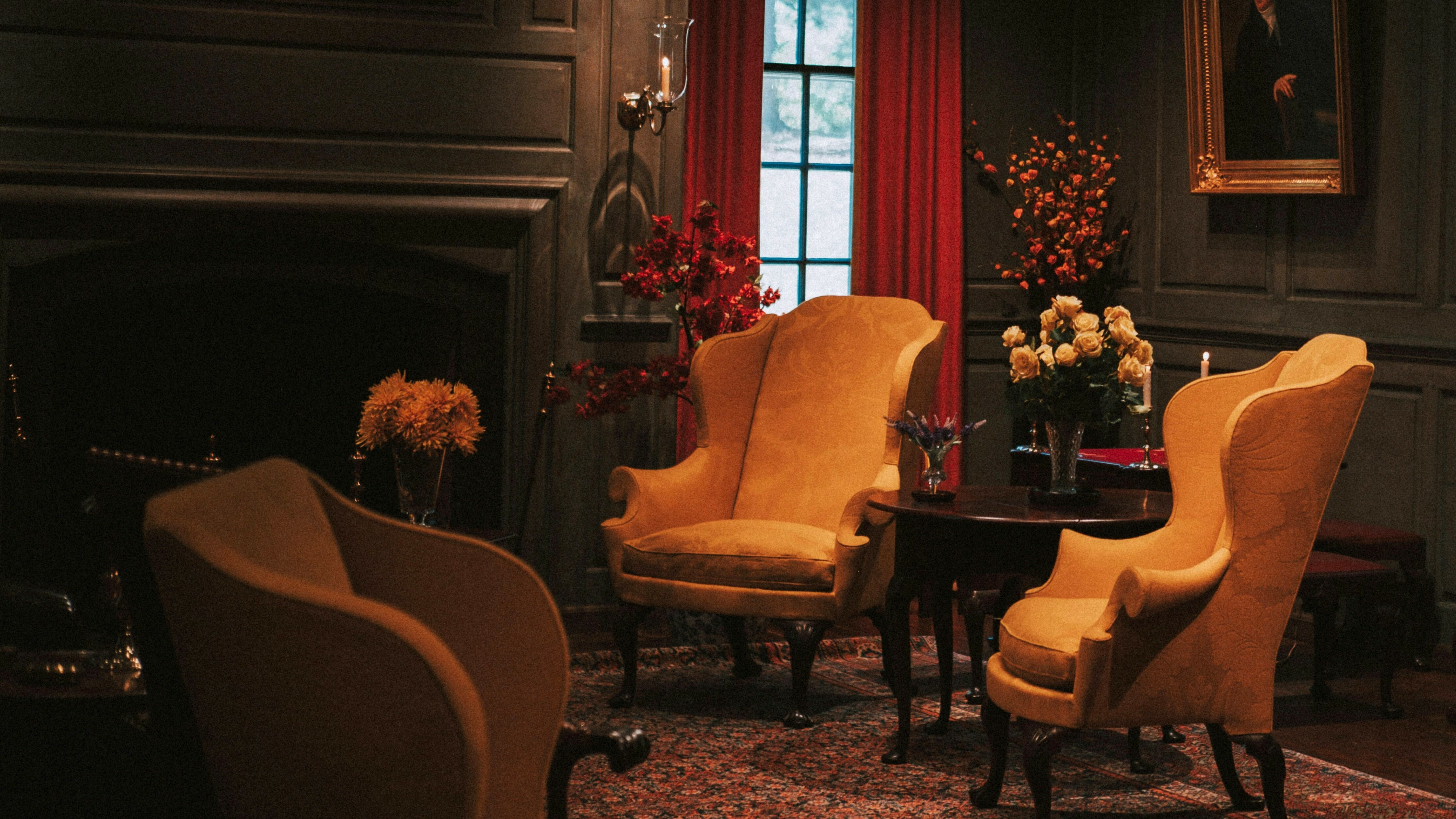
As a child hearing this verse, I always had an image of going into an actual closet to pray (Maybe your closets are different from mine, but finding a place even to stand in any of them would be difficult, if not impossible). If you saw the movie, War Room, you saw that Miss Clara had an actual closet that she had converted to her prayer War Room, much like the one I had envisioned in my childhood. As an adult, I once came to visit my parents, and my dad said, “Your mother will be right out; she’s in her prayer closet.” I could just see my very proper, English teacher mother sitting in a closet with the door closed. When she came into the room where we were, I asked her where she had been. She said, “In my prayer closet.” Seeing the incredulous look on my face, she added, “It’s the gold chair in the living room.”
I don’t know how it was in your house, but when I was growing up we weren’t even allowed in the living room, unless there was company. The gold chair my mother referred to might as well have been Queen Elizabeth’s throne, for all the access I would have had to it. She went on to explain that the gold chair was her sacred space, her prayer closet, where she could go and talk with her Lord and not be interrupted by the cares and preoccupations of the world.
The audience Jesus was speaking to would have well understood his meaning when he told them to go to their room and shut the door. Most of them lived in homes with only one room, but, it was common to have a separate storage area for foodstuffs. This would have been the only room with a door and could easily have been considered a “closet.”
Eugene Peterson paraphrases it this way in The Message: Here’s what I want you to do: Find a quiet, secluded place so you won’t be tempted to role-play before God. Just be there as simply and honestly as you can manage. The focus will shift from you to God, and you will begin to sense his grace.
Have you ever thought of yourself “role-playing” before God? Do we really think it is possible to role-play before the omnipotent, all-knowing, all-seeing Creator of the Universe? Yet, I think we often do.
My mother understood Jesus’ point was for us to have an intimate and private time with God, a time with no pretentions, with our soul laid bare before him.. She knew she needed to find a place apart, a sacred space, if you will, where there would be no interruptions and where she could talk to—and hear—God, and feel His grace and peace. For her it was the gold chair in the living room.
Do you have a sacred space, a prayer closet, where you go to pray? If so, good for you. If not, why not ask God to show it to you? It could be as close as the gold chair in the living room or as unlikely as our car during the commute to work. It might be as simple as a bench in the back yard or the kitchen table. John Wesley’s mother is said to have sat in a chair and thrown her apron over her head as a sign to her kids to leave her alone.
Perhaps Miss Clara was right to call her prayer closet her “war room.” I found an AI definition of war room that says a war doom is a dedicated, centralized, and high-energy space—physical or virtual—where teams, such as in business, politics, or emergency management, gather to strategize, coordinate, and make critical decisions for complex projects, campaigns, or crisis management. That pretty much covers it—you and God, together, dealing with the complexities of life.
Whatever space you choose as your “prayer closet” or “war room,” remember that the One who created your in His image wants intimate, personal time with you, for you are precious in His sight.
Prayer: Loving Father, I want to commune with you, just us, one-on-one. Lead me to a special place apart where I can feel Your presence and hear You speak to my heart. AMEN.
Fr. Steve +