TLDR: Yesterday was the Feast of the Epiphany in which we remember the Magi. The story given to us by our Christmas postcards is very different to the actual story in the Gospel of Matthew. Read below for an introduction to the biblical Magi and for some clues about why Matthew chooses to give us this story.
We celebrate the Feast of the Epiphany on January 6 every year. The text for this day comes from Matthew 2:1-12. This is a well-known passage. In fact, we know it so well that many of us tune out the moment we hear it read. It is one of those places where familiarity really does breed contempt. I don’t blame us. We assume we know the story better than we actually do. There is a lot more happening behind the scenes than three (wise men, kings, astronomers…) following a star to meet a newborn king.
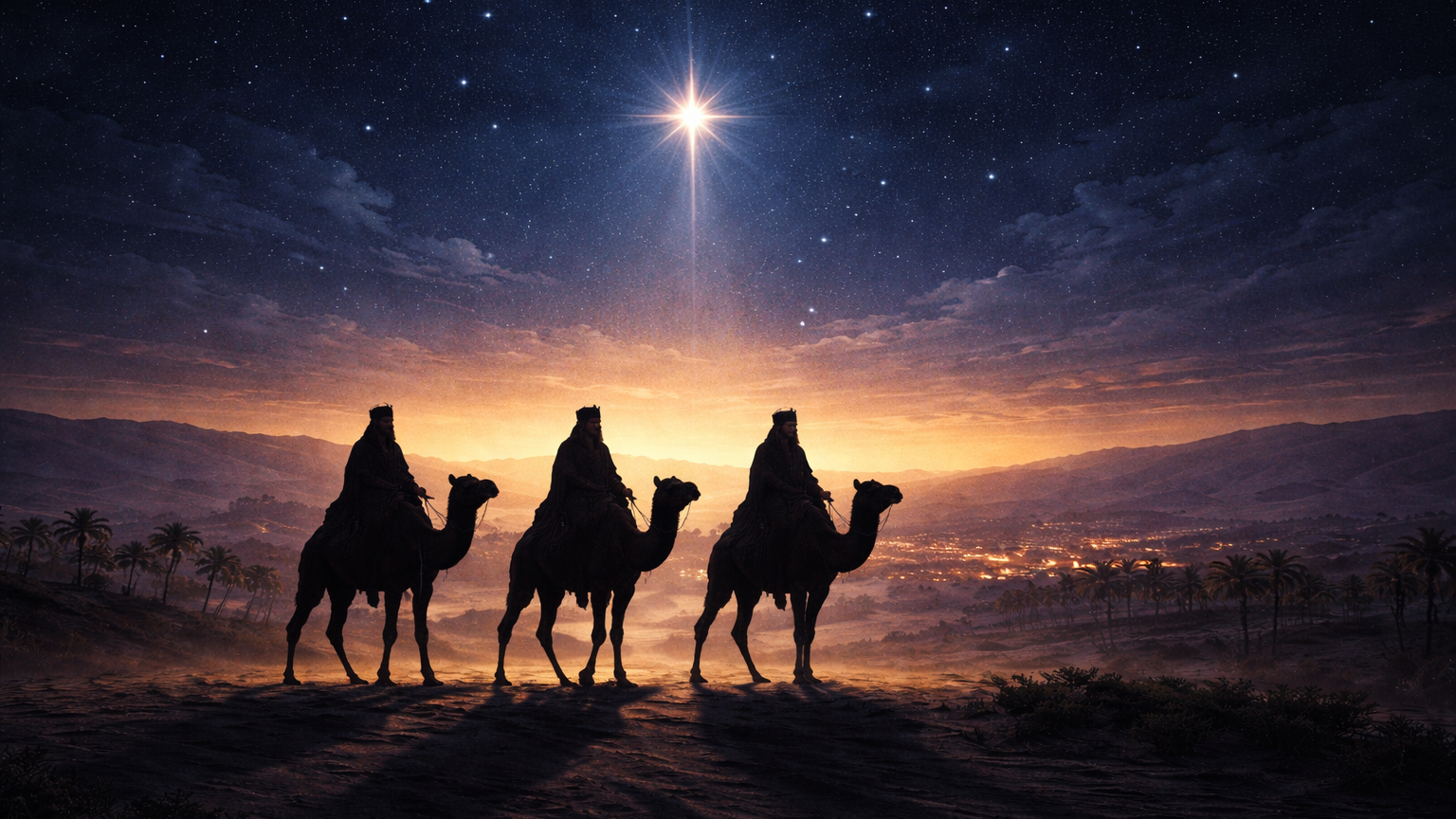
Most Christmas postcards confirm our assumptions. They show three well-dressed kings, draped in fine robes, carrying expensive gifts, traveling across continents to worship the baby Jesus. We see them engaged in international politics as they speak with King Herod. We imagine them listening attentively to scribes and chief priests who explain where the Messiah is to be born. And then, we see them marching neatly to Bethlehem, where they find the child. It is a beautiful story, but it is not the story Matthew tells.
When we slow down and read the text carefully, what we discover is not a sentimental scene but a radical story of grace, filled with sharp contrasts and unsettling reversals. It is a story in which outsiders recognize what insiders miss. For starters, Matthew never tells us how many magi there were. The idea that there were three comes from later tradition, based on the number of gifts mentioned. Scripture itself is silent. We also do not know their names or what they looked like, although in many Latin American churches they name them Melchor, Gaspar, and Baltasar and give two of the men a white skin and the last a darker color. These details come from legend, not from the Gospel.
Even the term “wise men” can be misleading. The Greek word Matthew uses is magi, which are not philosopher-astronomer-king types of characters. Originally, in Persia, magi were dream interpreters. By the time of Jesus, the term referred to stargazers and fortune-tellers. Our English words magic and magician come directly from this word. To the Jewish people of Matthew’s day, magi were not royal scholars. They were Gentile practitioners of superstition, people whose religious practices were explicitly condemned in the Jewish law. If we were looking for a modern comparison, we might think of horoscope devotees, psychics, or Tarot cards readers.
Which raises an important question: Why does Matthew make these people the first Gentiles to recognize Jesus? To understand what Matthew is doing, it helps to place the magi alongside the shepherds who appear earlier in the birth narrative. As I wrote last week, shepherds were not romantic figures in the ancient world. They were considered unclean, unreliable, and morally suspect. They lived outdoors with their animals, bathed infrequently, and were not allowed to testify in court. In different ways, both shepherds and magi lived on the margins of society. One group was dismissed for its poverty and impurity. The other was dismissed for its foreignness and false religion. And yet, it is to these people that God reveals the birth of his Son. This is not accidental, but purposeful theology, and Matthew means something profound though this story.
The story of the magi is ultimately a story about two kingdoms and two very different responses to Jesus. The magi see a star and assume that a king has been born. This belief was common in the ancient world. Theologian Raymond Brown notes that many cultures believed the birth of a great ruler would be marked by a new star in the heavens. Acting according to their worldview, the magi go to Jerusalem, the place where the kings of Israel live. There, they ask a question that changes everything: “Where is the child who has been born king of the Jews?” When King Herod hears this, he is frightened, and for good reason. Herod was not a legitimate king in the eyes of the people. He ruled as a puppet of Rome, his power entirely dependent on keeping order and suppressing rebellion. He knew the prophecies. He knew the people longed for a Messiah. And he knew that the birth of a true king would mean the end of his reign.
Herod consults the religious experts, learns that the Messiah is expected to be born in Bethlehem, and then sends the magi on their way with a lie. He claims that he too wants to worship the child, though his true intention will soon be revealed as violence. This is where the story becomes deeply unsettling. The scribes quote the prophecy correctly, but they themselves do not go to Bethlehem. Likewise, the chief priests believe the prophesies and expect the Messiah, but they also do not go to Bethlehem. Herod claims authority as king, but he also does not go to Bethlehem. The insiders, those with knowledge, power, and religious credentials miss the moment entirely. In fact, they are not interested in witnessing the event personally.
Instead, it is the outsiders who follow the signs they are given. The shepherds obey the angels and go to see the baby. The magi travel to see the child, fall to their knees, and are “overwhelmed with joy.” Matthew is making a bold theological claim: proximity to religious power does not guarantee openness to God. Sometimes it is those farthest from the center who see most clearly. This is where the story becomes good news. If God chooses shepherds and astrologers to be the first witnesses to the birth of Jesus, then there is nothing in our lives that disqualifies us from encountering him. There is no sin too deep, no doubt too persistent, no background too complicated to place us beyond God’s reach. In fact, there is nothing in the lives of the people we encounter every day that should cause us to believe they are beyond grace. If outsiders are welcomed at the beginning of the story, then we have no right to close the doors later.
Matthew ends the story with a small but powerful detail: the magi return home by another way. This is more than a travel note. Early Christians called their movement “The Way.” To encounter Jesus is to be changed, to have one’s direction altered. The magi arrive as stargazers. They leave having encountered the living God. Whatever else we believe about them, this much is clear: they do not go home the same.
I don’t know what led you to read this story today. I don’t know what doubts, fears, or wounds you carry. But I do know this: God is not repelled by who you are. From the very beginning, God has chosen unlikely people to bear witness to his Son. The invitation of Epiphany is simple and profound: come, see, and then go another way. Leave transformed, changed, filled with hope. God has chosen a small child to be the answer to the problem of sin, to be the truth, the way, and the life. And you, like the magi, are a witness to this great miracle.
May God continue to bless you, Fr. Roman+