
TLDR: I have been thinking about an old poem that aptly describes what Holy Week means for Christians. Please read on for more and enjoy.
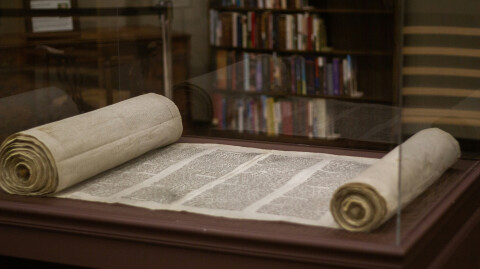
We had our annual Daughters of the King Quiet Day at the Lannier Theological Library this last Thursday, March 19th. This year, I used three different poems as guides for my reflections. The first poem, Forgiving, was written by Chris Maxwell, a well-known pastor. The second poem, The Journey, is one of my favorites by Mary Oliver. I have been thinking about the third poem, Tripping Over Joy, by the Iranian poet Hafez (Shams-ud-din Muhammad) for the best part of two weeks. Hafez (1310-1390 CE) was a “Persian Lyric poet who grew up in Shiraz… He became a poet at the court of Abu Ishak and also taught at a religious college. He is one of the most celebrated of the Persian poets, and his influence can be felt to this day. As the author of numerous ghazals expressing love, spirituality, and protest, he and his work continue to be important to Iranians, and many of his poems are used as proverbs or sayings.” (https://www.poetryfoundation.org/poets/hafez). The poem reads like this:
Tripping Over Joy
by Hafez (Shams-ud-din Muhammad)
I love the idea that the spiritual life is a chess game between us and God. Chess appears simple, but it is rather complex, always filled with strategy, drama, nuance, and movement. One of my favorite novellas by the Austrian author Stefan Sweig, A Chess Story, takes place on a cruise ship where passengers challenge the world chess champion to a game. This is how the author describes chess, “But is it not already an insult to call chess anything so narrow as a game? Is it not also a science, an art… a unique yoking of opposites, ancient and yet eternally new, mechanically constituted and yet an activity of the imagination alone, limited to a fixed geometric area but unlimited in its permutations, constantly evolving and yet sterile, a cogitation producing nothing, a mathematics calculating nothing, an art without an artwork, an architecture without substance and yet demonstrably more durable in its essence and actual form than all books and works, the only game that belongs to all peoples and all eras, while no one knows what god put it on earth to deaden boredom, sharpen the mind, and fortify the spirit?”
I love this metaphor of the chess game for our spiritual life. I remember when I first learnt to play the game and would try very hard to impress my instructor. I would advance when I had to retreat, I would retreat when the opportunity was ripe for advancement, I would use wild moves that always impeded my strategy, I would give up prematurely when I didn’t see the game going my way, and I would try to control the environment by delaying moves unnecessarily or by moving too quickly to get my opponent off balance. Invariably, however, all my maneuvering would fail and I would have no choice but to accept my defeat.
It is likewise in our relationship with God. As Mark Oakley reminds us in his book, The Splash of Words (Canterbury Press, 2021, 31) “We are often so committed to our religious games that we feel we have thousands of important moves to gain God’s attention. We often fail to see God’s fantastic moves in our lives and think we can gain control over the chessboard through our acts of devotion and our righteous thoughts.” We forget that progress and growth in our spiritual life are always about God acting in our lives, and not about us trying to pull ourselves up by our bootstraps. We forget that all control is ephemeral and that God is more attracted by our need than by our righteousness.
The poem tries hard “to show that the game is always God’s, no matter how serious a player we think we are. Joy comes in accepting the fact and becoming lost in a humble way.” (Ibid.) Often, our religious pride convinces us that we are capable of doing what no one else has ever been able to do before, that somehow we can save ourselves. Mistakenly, we often believe God is more impressed by our righteousness than by our humanity. But God is in love with our humanity and is always performing fantastic moves we can never quite comprehend. In the presence of such acts our only option is to laugh and to fill our hearts with joy. Like the mystic staring up to heaven in a field of wildflowers, we must say, “Ha! You’ve done it again. Well played, Sir!”
We are about to enter into God’s most majestic move this coming Sunday. God’s own Son will enter triumphantly into The Holy City, will redefine Temple worship, will reinterpret the greatest of all meals, (giving us the Holy Eucharist,) will come face to face with the empire of the day, will walk willingly to his death for the forgiveness of sinners of all generations, will rest in a cold tomb for three days, and will rise triumphantly to become for us the only means of salvation. What a glorious and majestic move! This action redefines what it means to be in relationship with a loving God. Our only way forward is to yield to God’s love in the Messiah, to raise our eyes to heaven and to say, “You’ve got me, I surrender!”
May this coming week be the most holy of weeks for you, and may you be able to surrender to a God who has always loved us in ways we will never fully comprehend.
Blessings to you, Fr. Roman+